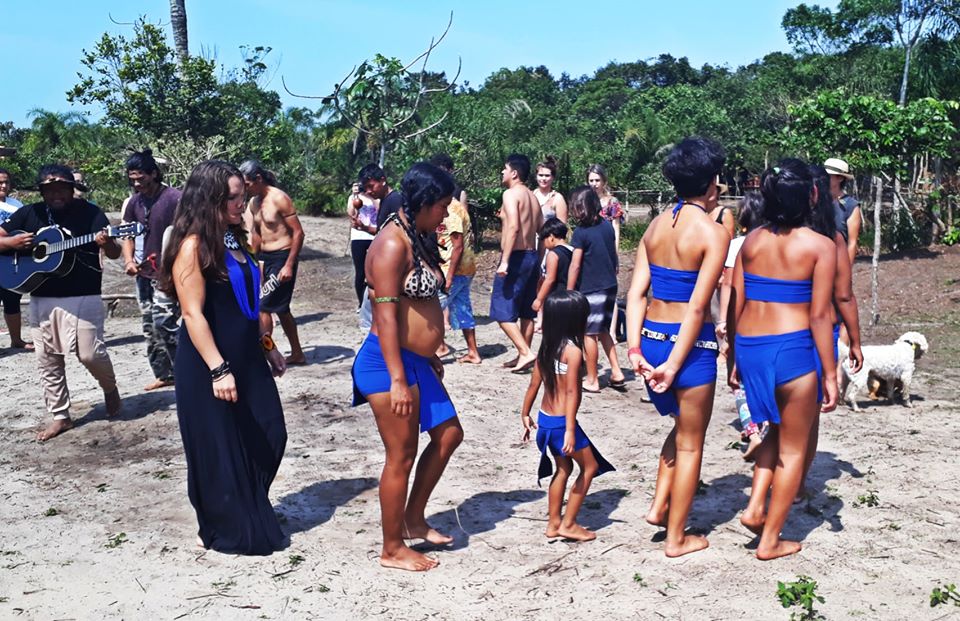
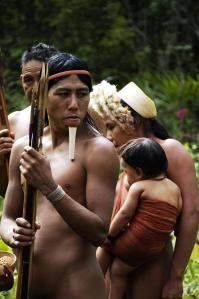
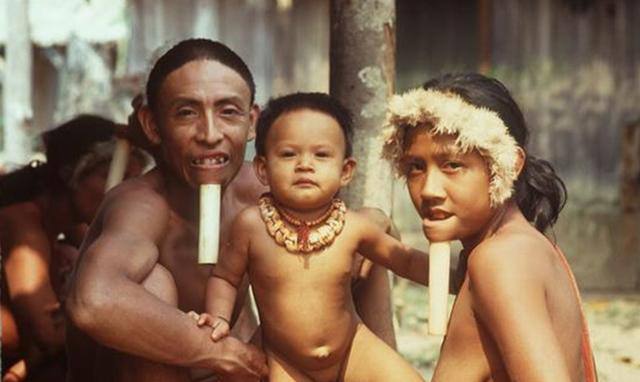
Tapirema tribe located in Peruíbe, São Paulo, Brasil 2019
THE SYSTEM AND THE ILLUSION OF CHOICE
We are obligated to identify with the system we live under to survive. The current system is inherently individualistic. Rarely do we identify with others in modern society, precisely because it is extremely individualised, and we are only able to identify with those who share our traits and tastes. We are unable to connect with those unlike us, much less see ourselves in them.
The difficulty with identifying with those of another class is great (either it might be financial, racial and so on), however, although we differ in these ways that create greater distance between us, in an industrialised and globalised society, many other factors can be taken into account to the point we are micro-individualised. We differ in our taste and access to music, films, books, trees, food, all belongings and knowledge.) In a tribalistic community we are likely to listen to the same music for they are made by us or the ones before us, we are likely to be able to identify the same types of trees, flowers and mushrooms depending solely on what location we live in, we eat the same food for it is hunted or gathered in groups or with the group in mind, we are likely to own the same basic items — with the main differences being dependent on the sex of the person and stage of life, we are likely to have the same basic skills.
In a tribalistic society, we depend on the same technical knowledge to survive; one may be more skilled with a spear than with the arrow and bow, but s/he will be taught the basics nonetheless. S/he may enjoy playing a certain instrument more than the others, but s/he will either know the basics of all others or play accompanied by the community.
The point is that there are fewer categories and all of them are explored as baseline knowledge, which is not doable in modern society.
Globalisation did bring people closer to each other in the physical sense, but have divided them, reinforcing the sense of the self. We are currently far removed from activities which depend on a tight community. When they happen it is due to specific shared interests — liking the same band or book — obligation — socialisation at work, school, university — or location (neighbourhood meeting). The system we identify with is highly individualistic; the more progress is created, more categories are made, more division takes place. The fragmentation and dispersion of culture degrades it causing us to be more dependent on the system, as our one shared similarity.
Under industrialisation and globalisation, even neighbours do not share the same base knowledge as each other. The two things we share with certainty are our neighbourhood and conformity to the system, which is not based on culture. We are left with subcultures only.
We have been made to be so disconnected from each other that not even the nuclear family has survived the division created by the system.
Whilst in a tribalistic society it is to be expected that the nuclear family will inhabit the same land, wander the same wilderness, shower in the same river, eat the same food, dress alike, listen to the same music, do most activities with each other or in the same area, in the industrialised, individualistic society the daily life of each member of the nuclear family is spent far away from each other (perhaps overseas) and is consistent of extremely different activities, each of them have had a different upbringing and have different taste in entertainment, food, clothes, etc.
We are not freer in industrialised society, we simply have more options — the illusion of choice.
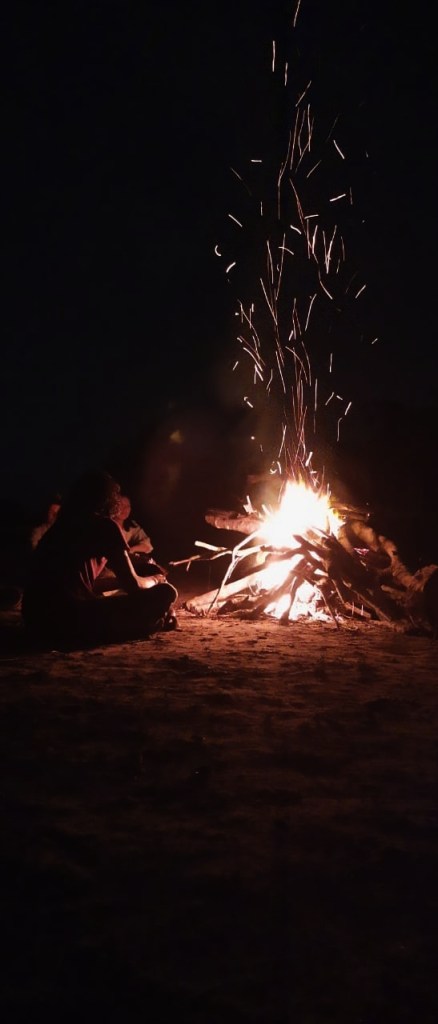
7th of September 2019
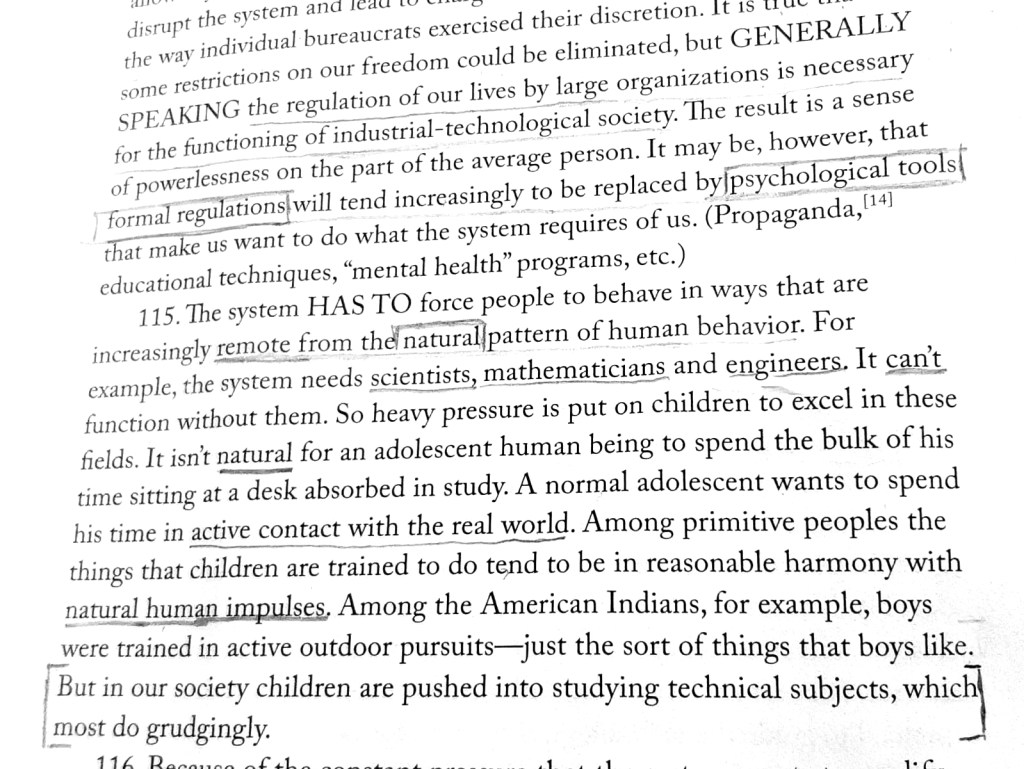
In order to survive current society, we must act in accordance with the system we are born under. We have non-significant participation in its creation, rules and progress on an individual basis yet must accept it as our only possible reality. It cripples us of knowledge on wilderness survival so we are dependent on its existence and continuation.
Although we may consider modern democracy to be superior to dictatorship, the difference is much less tangible than it is perceived by citizens when we speak of freedom, we possess the illusion of choice and therefore consider ourselves fortunate.
For a person to satisfy the most basic need, which is to eat, one is obligated to travel far from their loved ones, often outside one’s neighbourhood so they can work an excessive amount of time completing meaningless tasks that only matter in the context of an industrialised society, one depends on working to receive currency by the end of the month — removing any hope for instant gratification from the work done —, they spend such currency on transportation to buy low quality products.
In tribal communities one has access to the living forest and the knowledge, the skill to hunt and how to identify edible fruits, mushrooms, etc. These are most often group activities done with your community, strengthening bonds. Not strangers you are obligated to be polite to so you can continue feeding your family.
So to be fed, clothed and housed one must work, the system only works if you work for it. Its terms are heavily conditional.
 The Black Deer Project